Wednesday, April 10, 2013

Your Content Strategy


“Your Content Strategy Should Be as Easy to Articulate as a Children’s Story Book”

Children's book authors may point out that a children's book is hardly easy to create; however, a good children's book flows in an manner that's easy to read and understand. Stefanos Karagos believes you should approach your social media with a plan in mind. Create content that matters; don't just spam your Facebook page with photos. He has an excellent slideshow that demonstrates his viewpoint (no, seriously, it's a very cool slideshow!) Take a look below:


Monday, April 8, 2013

Interview With Zoe Tucker

Today I'm reading an interview with Zoe Tucker, an Art Director at Alison Green Books. One of the first things she says about the children's book process is something I hear repeated time and time again:

"Well, in a nutshell, it all begins with a good story."

She sheds a bit more light on the job that falls to the illustrator. It's not just about having "pretty" art, or a colorful image. Good things to think about when illustrators are creating portfolio samples as well:

"The characterization is key to everything. It’s very important that the main character can ‘carry’ the story convincingly. Can they make lots of facial expressions, stand in different poses, sit down, kneel, twist etc? Rather annoyingly, I’m sure, I usually ask the illustrator to do pages of characters roughs, working on body shape, expressions and poses."

She likens the thumbnail sketching and planning process to planning a storyboard for a film:

"Films are rarely shot from the same one angle and likewise in picture books, variation in perspective and scale can help add drama and energy, whilst a minimal linear approach can keep a story quiet and simple."

If you want to read the entire article, and see all the lovely pictures, check it out below:

Interview with Zoe Tucker

Friday, April 5, 2013

Designing Characters With Shape

I stumbled across a couple of blogs talking about Luigi Lucarelli's character design, so I thought I should check it out for myself. I haven't gone through all the videos yet, by far, but they seem to be a great resource for children's artists, animators, and concept designers as well.


Luigi so far seems to be just starting out, having worked with a few clients such as Six Degrees Games and Fuhu Inc, but I can easily see him working with Dreamworks, Cartoon Network, and the like. Maybe he'll start teaching, and take these tutorials to a classroom.

Youtube:

Designing Characters With Shape

DA Portfolio:

Luigi Lucarelli

Thursday, April 4, 2013

Interview With Carol Chu

I found a fantastic resource through a LinkedIn contact, which anyone hoping to work in children's books or publishing should take advantage of. ChildrensIllustrators.com has a whole stockpile of interviews with art directors, publishers, and editors available to view on their website. Unfortunately the interviews are not dated, so I can't say how old these interviews are or if the people interviewed are even in that same position still, but this can be a helpful resource to get a general picture about how to approach an art director or publisher.

The very first interview I read, and connected with, was with Carol Chu as the art director of the children's trade division at Houghton Mifflin Harcourt:

*Interview with Carol Chu*

Some highlights that I found especially useful:

On keeping your focus and going after your goals: "At every fork in the road, I took the path which eventually led me here."

What she looks for when viewing illustrator submissions: "The portfolios which get passed around have a distinct voice/vision and we send them around to everyone in the design department. I would rather see a portfolio with a strong point of view which might not be right for a lot of books than a middle-of-the-road functionally competent portfolio which can be forgettable and generic."

On whether she prefers working with established pros or new talent: "I care about meeting deadlines and clear communication between me and the illustrator... I prefer working with someone whose QUALITY is consistent."


Tuesday, March 26, 2013

Rules For Good Storytelling

 Pixar has had enormous success in recent years, becoming an animation behemoth. Sure, their movies look fantastic, but the real key to success is the story.

Emma Coats, a storyboard artist at Pixar, has recently laid down her rules for great storytelling. They are really fantastic items to keep in mind, the next time your sit down at your computer or desk and start your next project.


#1: You admire a character for trying more than for their successes.

 #2: You gotta keep in mind what's interesting to you as an audience, not what's fun to do as a writer. They can be v. different.

#3: Trying for theme is important, but you won't see what the story is actually about til you're at the end of it. Now rewrite.

#4: Once upon a time there was ___. Every day, ___. One day ___. Because of that, ___. Because of that, ___. Until finally ___.

#5: Simplify. Focus. Combine characters. Hop over detours. You'll feel like you're losing valuable stuff but it sets you free.

#6: What is your character good at, comfortable with? Throw the polar opposite at them. Challenge them. How do they deal?

#7: Come up with your ending before you figure out your middle. Seriously. Endings are hard, get yours working up front.

#8: Finish your story, let go even if it's not perfect. In an ideal world you have both, but move on. Do better next time.

#9: When you're stuck, make a list of what WOULDN'T happen next. Lots of times the material to get you unstuck will show up.

 #10: Pull apart the stories you like. What you like in them is a part of you; you've got to recognize it before you can use it.

#11: Putting it on paper lets you start fixing it. If it stays in your head, a perfect idea, you'll never share it with anyone.

#12: Discount the 1st thing that comes to mind. And the 2nd, 3rd, 4th, 5th – get the obvious out of the way. Surprise yourself.

#13: Give your characters opinions. Passive/malleable might seem likable to you as you write, but it's poison to the audience.

 #14: Why must you tell THIS story? What's the belief burning within you that your story feeds off of? That's the heart of it.

 #15: If you were your character, in this situation, how would you feel? Honesty lends credibility to unbelievable situations.

#16: What are the stakes? Give us reason to root for the character. What happens if they don't succeed? Stack the odds against.

#17: No work is ever wasted. If it's not working, let go and move on - it'll come back around to be useful later.

#18: You have to know yourself: the difference between doing your best & fussing. Story is testing, not refining.

 #19: Coincidences to get characters into trouble are great; coincidences to get them out of it are cheating.

#20: Exercise: take the building blocks of a movie you dislike. How d'you rearrange them into what you DO like?

#21: You gotta identify with your situation/characters, can't just write ‘cool'. What would make YOU act that way?

#22: What's the essence of your story? Most economical telling of it? If you know that, you can build out from there.


Follow Emma on Twitter here.

Monday, March 25, 2013

A New Year, A (Kind Of) New Style

Just as I was starting to think about experimenting with my watercolor style, I stumble across an artist who is already doing exactly what I wanted to try. Figures. Anyway, he's in France so I'm gonna do it anyway.

His name is Nicolas Weis, from Paris, recently relocated to California. While Google Translate is not the most high-quality translation service, he seems very passionate about his personal work. And with good reason, it's lovely.

He has worked on the concept art for both "How To Train Your Dragon" and "The Croods", but I think I like some of his personal work the best:

Monday, March 18, 2013

George Lucas May Give Us A New Museum


George Lucas has submitted a proposal to open a museum featuring comic art, illustration, animation, and concept design in San Francisco. Awesome, right?


...Let's just hope it's not filled with images of Jar Jar Binks.

Lucas described the proposed museum as "dedication to cultural fantasy"...  equipped to teach storytelling and the means of executing ideas. 
-Article

^ Which I think is a fantastic idea! Storytelling is a way to bring people together, and it's what gives all these different art mediums their meaning and appeal. 


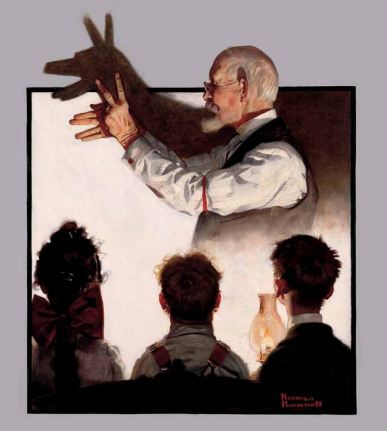
"I’m a storyteller at heart, and I understand the power of a visual image to tell a story. I know how works of art can ignite children’s imaginations and even change their lives. They changed mine. Even before I could verbalize what I was feeling, I was drawn in by Norman Rockwell’s ability to tell a 
complete story in a single image. And so much of that imagery captured American cultural truths and 

aspirations. It was then that I began to learn the art of visual storytelling. As my career as a filmmaker 
grew, so did my love of art and passion for collecting."


Apparently Lucas has collected enough art over the years to stock the museum himself for 6 years of rotating exhibits. I imagine much of that is Star Wars and other movie-related items. So jealous.

You can even view his official proposal here: George Lucas' Museum Proposal